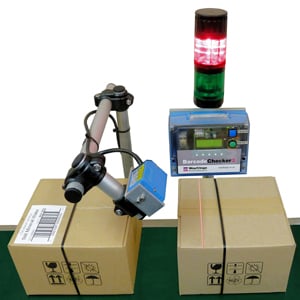
Automated Barcode Checking for High-Volume Manufacturing

In most production environments, it is not practical to verify every barcode to ISO standards during a live run. Instead, manufacturers typically rely on:

    • First-off and last-off barcode verification
    • Periodic spot checks during production
    • Manual inspection at end of line

This leaves a critical gap where barcode problems can occur unnoticed mid-run.

Barcode Checker systems are designed specifically to fill that gap by providing real-time verification of barcode presence and correctness during production, where formal ISO verification is not possible.

Let's Make It Stick

Common Barcode Failures on Production Lines

Without automated barcode inspection, the following issues commonly occur:

    • A barcode is missing or incorrectly positioned
    • A barcode reads but contains the wrong data
    • Print quality drops during the run without being detected
    • The wrong barcode is applied to the wrong product

These issues are particularly damaging in supermarket supply chains, where mis-applied barcodes can lead to rejected pallets and significant downstream cost.

How the Weyfringe Barcode Checker 4 Works
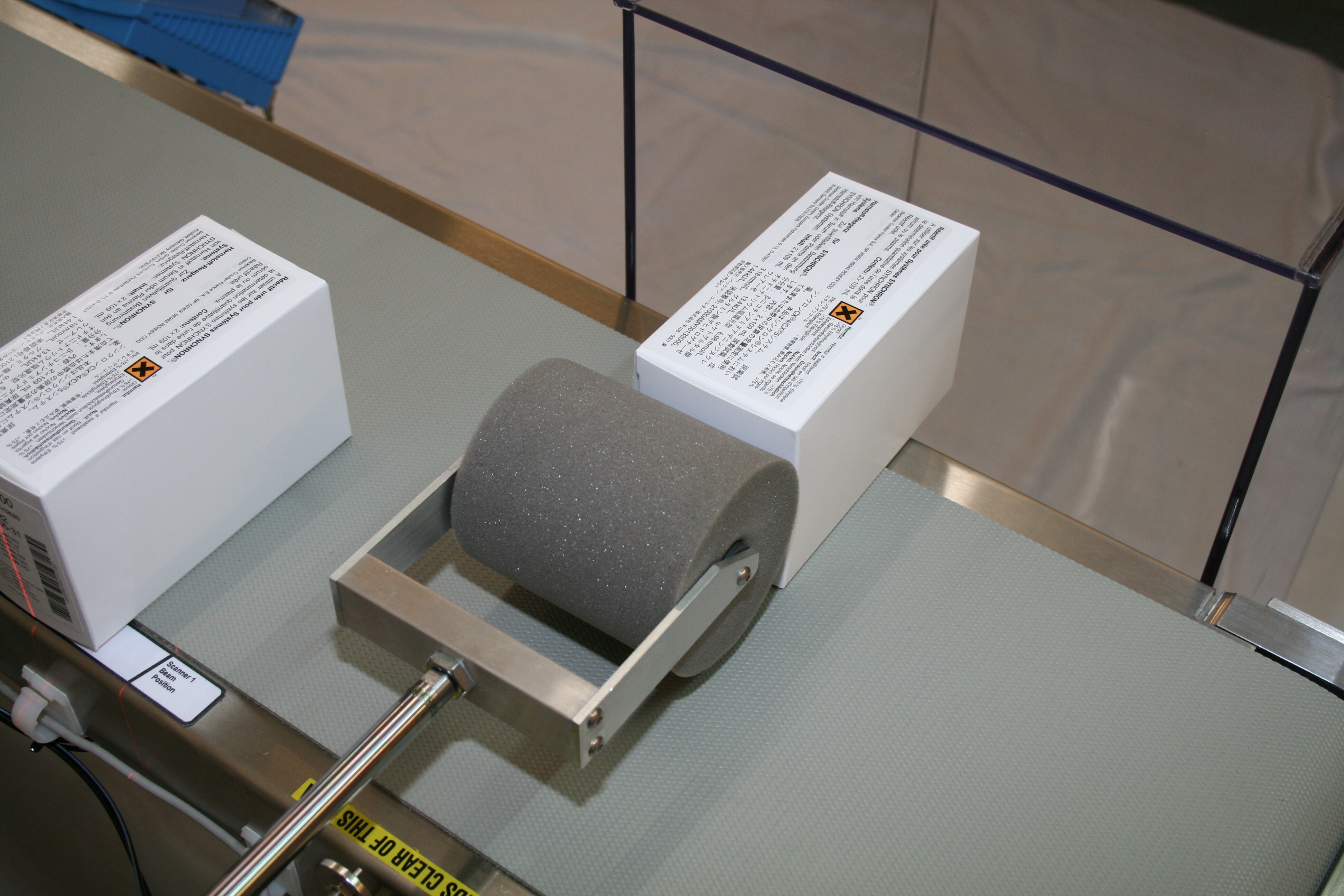
Add a reject station to isolate bad barcodes

The Barcode Checker 4 is installed directly on the production line and operates as a barcode presence scanner combined with data validation.

As each product passes on the conveyor, the system automatically:

    • Detects approaching product
    • Confirms a barcode is present in the expected location
    • Performs barcode reading and validation
    • Checks that the barcode data matches the correct product
    • Triggers an alarm or output signal if a fault is detected

This form of conveyor belt barcode checking allows issues to be identified immediately, enabling operators to intervene before errors escalate.
Preventing Production Line Barcode Errors in Real Time

Barcode Checker systems are designed to prevent barcode mis-applied production by detecting errors at the point they occur, rather than at the end of the process.

By identifying missing, incorrect or unreadable barcodes as products move through the line, manufacturers can:

    • Minimise rework and relabelling
    • Reduce waste, particularly in food and beverage production
    • Maintain consistent supply to supermarkets and distribution centres
    • Protect customer relationships and retailer compliance

This approach forms part of a wider retailer penalty avoidance strategy when combined with formal barcode verification.

Barcode verification vs Barcode checking

Barcode Checking vs Barcode Verification

It is important to distinguish between ISO compliance and real-time checking.

    • Barcode verification (using systems such as Axicon) grades barcode quality against ISO standards and provides formal compliance evidence.
    • Barcode checking focuses on real-time inspection, confirming that the correct barcode is present, readable and applied to the correct product during production.

Most manufacturers use both:

    • Barcode verifiers for compliance and audit requirements
    • Barcode Checker systems for continuous production-line protection

Together, they provide a complete barcode quality control strategy.

Designed for Production-Line Integration
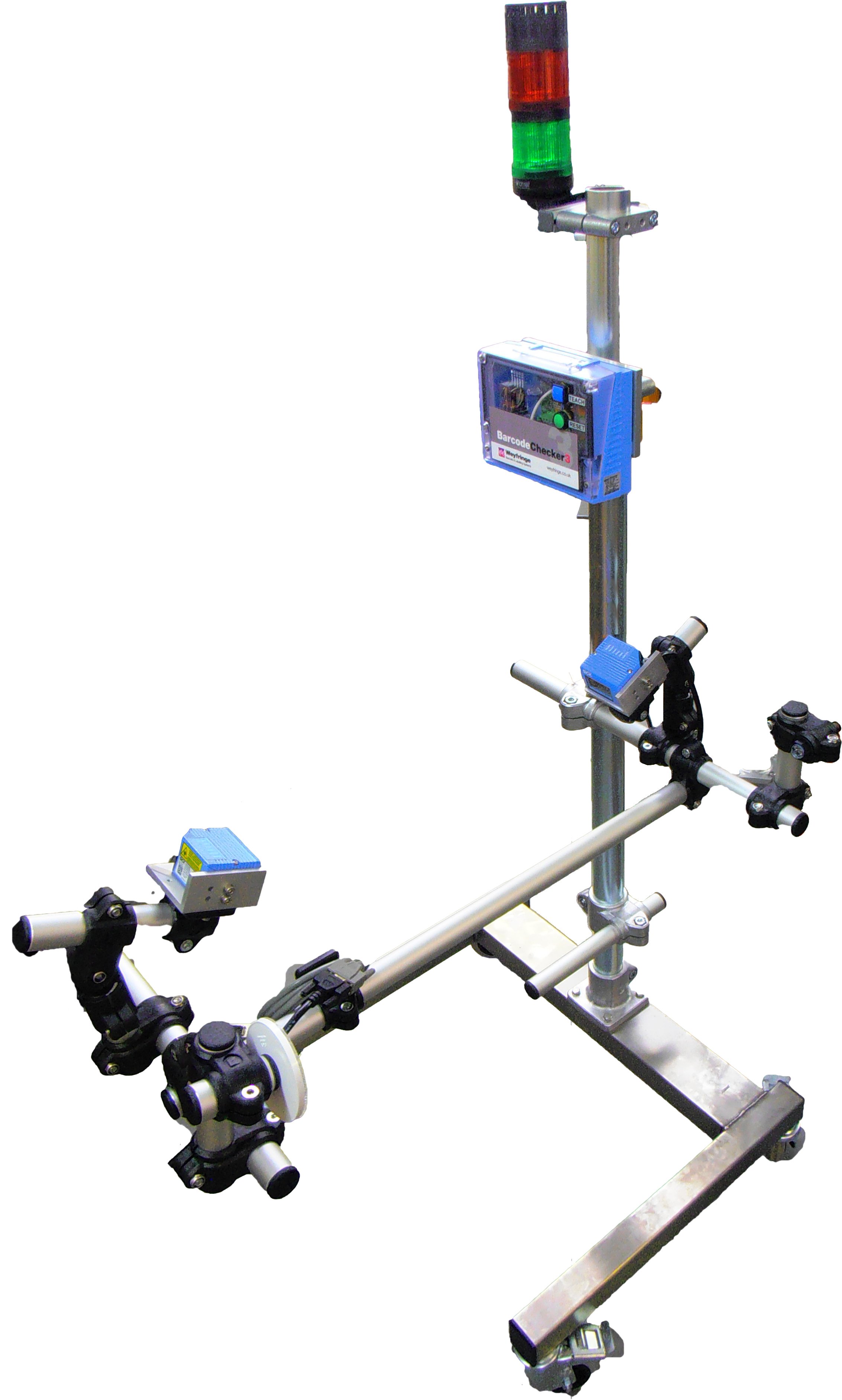
Dual barcode checker

Barcode Checker systems are designed for use in demanding manufacturing environments, including:

    • Food and beverage production
    • FMCG and consumer packaged goods
    • Contract packing and co-manufacturing
    • High-speed labelling and packaging lines

They integrate easily into existing production setups and support automated responses, allowing issues to be flagged without disrupting throughput unnecessarily.

Immediate Feedback for Operators

When a barcode issue is detected, the Barcode Checker 4 provides immediate visual and audible alerts.

This enables:

    • Rapid intervention by operators
    • Minimal production disruption
    • Faster root-cause identification

By providing automated code presence checks and validation at speed, the system helps teams stay in control of barcode quality throughout the run.